
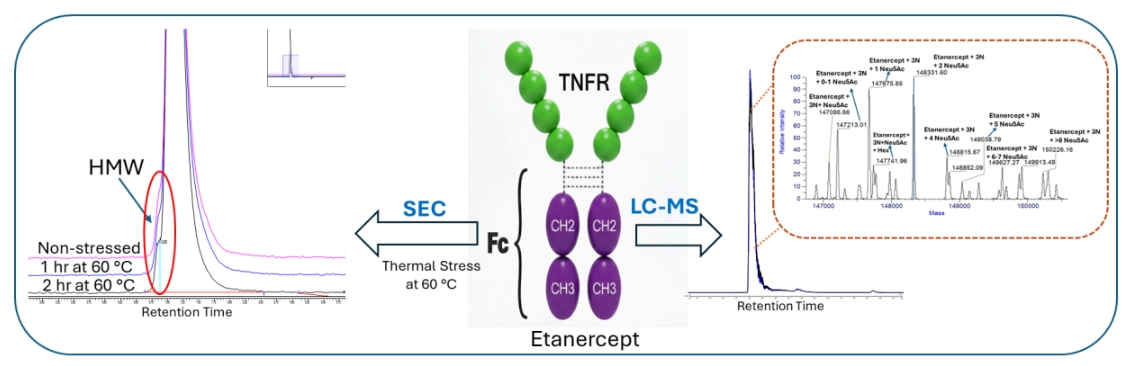
Etanercept is a recombinant tumor necrosis factor (TNF) receptor- Fc fusion protein widely used for the treatment of autoimmune and inflammatory disorders. Structurally, Etanercept consists of the extracellular ligand-binding domain of the human TNF receptor (p75) fused to the Fc region of human IgG1, forming a homodimeric fusion protein stabilized by disulfide bonds and extensive glycosylation (Figure 1). Due to its complex molecular architecture, including multiple disulfide linkages, N-linked and O-linked glycosylation, and Fc-mediated dimerization, Etanercept is susceptible to both physical and chemical degradation pathways. These may include aggregation, fragmentation, and subtle structural modifications when exposed to elevated temperature conditions.
Read the full application note: https://arlok.aflip.in/fusionprotein

Mycoplasma contamination remains a persistent and often underrecognized concern in cell culture and biologics production. These microorganisms are challenging to detect using routine microscopy due to their extremely small size and lack of a cell wall, which allows them to evade conventional detection methods. The presence of mycoplasma can significantly impact cell physiology, alter protein expression profiles, interfere with cellular metabolism, and ultimately compromise the reproducibility and reliability of both research outcomes and biopharmaceutical products.
Read the full application note: https://arlok.aflip.in/mycoplasma.html
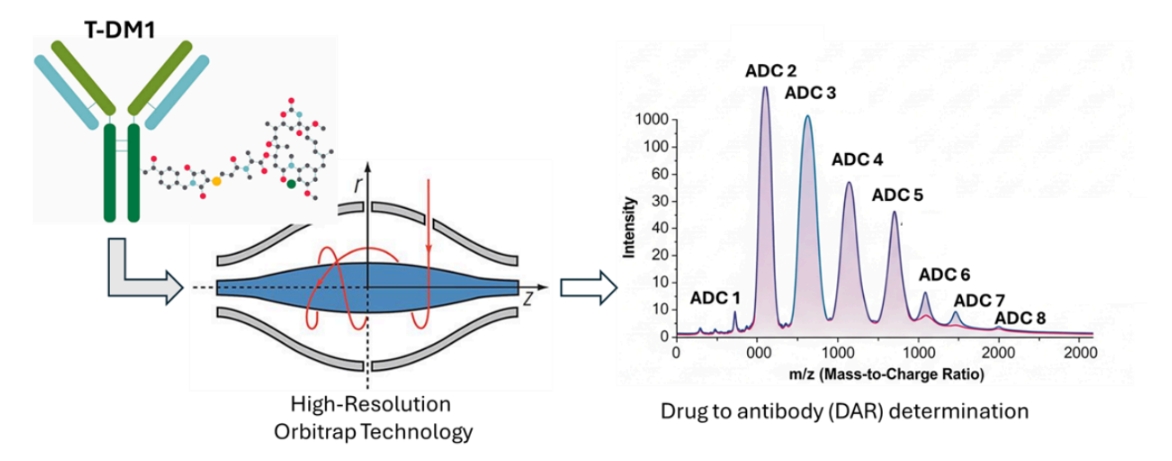
Antibody-drug conjugates (ADCs) have emerged as a promising strategy in targeted drug therapies. Currently, three ADCs have received approval from the U.S. FDA, with an additional ten candidates progressing through late-stage clinical trials. Maintaining the stability and integrity of the antibody-cytotoxic agent linkage throughout drug development and manufacturing is essential to ensure both safety and therapeutic effectiveness. Monoclonal antibody-based drugs have proven to be highly effective tools for delivering targeted therapeutic activity specifically to disease sites. ADCs consist of disease-specific monoclonal antibodies conjugated with one or more cytotoxic molecules. This technical note highlights Trastuzumab emtansine (T-DM1), a lysine-linked ADC conjugated with up to 8 drug molecules, which was analyzed using high-resolution Orbitrap technology to accurately determine the antibody-to-drug ratio (DAR).