
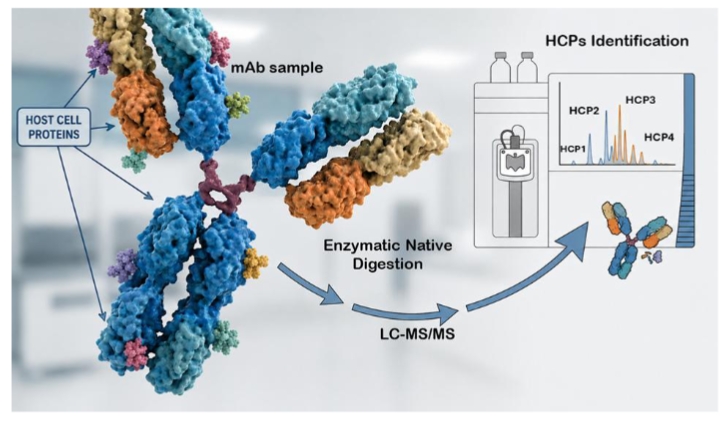
Biotherapeutic products manufactured in recombinant expression systems may retain trace amounts of proteins originating from the production of host cells. Even at low concentrations, these host cell proteins (HCPs) can influence product quality by affecting stability, reducing therapeutic performance, or triggering unwanted immune responses. Chinese hamster ovary (CHO) cells are the most common cell lines used for therapeutic drug production. As the biopharmaceutical industry continues to expand, the global demand for monoclonal antibodies (mAbs) and recombinant proteins is increasing.
Conventional immunoassays such as ELISA are commonly used to estimate total HCP content; however, they do not provide information about the identity, abundance, or potential risk associated with specific HCP species that could be critical quality attributes (CQAs)4. Advanced LC-MS/MS–based workflows offer a powerful orthogonal approach by enabling direct detection, characterization, and relative quantification of individual HCPs within complex biologic matrices. Despite these advantages, the identification of low-level HCPs remains analytically challenging due to the large dynamic range between highly abundant therapeutic proteins and trace-level residual impurities.
Read the full application note: https://arlok.aflip.in/hostcellprotein.html
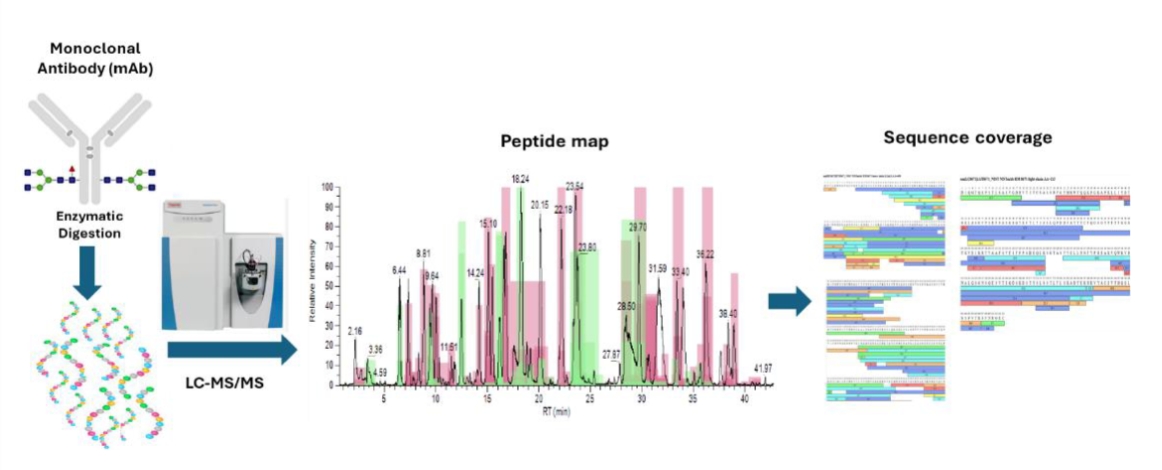
Biotherapeutics are complex, heterogeneous molecules produced in living cells, often from hamster, mouse, or bacterial systems. These systems are highly sensitive to variations in growth conditions, making the physical environment a critical factor in product consistency. Even minor changes can significantly impact the physicochemical properties of the final purified drug. Consequently, large-scale manufacturing processes for biotherapeutics require extensive optimization during development to ensure consistent product quality and efficacy.
Read the full application note: https://arlok.aflip.in/comprehensivepeptidemapping.html
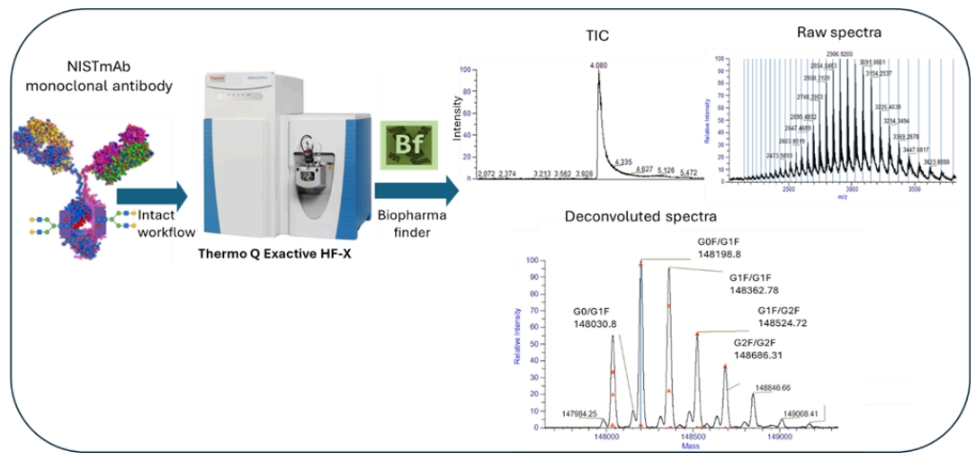
Biotherapeutics, including mAbs, biosimilars, ADCs, and nucleotide-based therapies, require precise characterization to ensure safety, efficacy, and regulatory compliance. Throughout development, manufacturing, and storage, these products can undergo modifications, making it essential to monitor impurities and microheterogeneity. Regulatory guidelines mandate the accurate analysis of post-translational modifications (PTMs), particularly glycosylation, due to their significant impact on biological function. At ARL Biopharma, we offer comprehensive biotherapeutic characterization using advanced mass spectrometry, liquid chromatography, and capillary electrophoresis. Our regulatory compliant workflows enable precise assessment of PTMs, glycosylation, and impurities while ensuring seamless data acquisition, processing, and reporting. By maintaining product integrity at every stage, we support pharmaceutical companies in meeting regulatory standards and delivering safe, effective therapeutics.
Read the full application note: https://arlok.aflip.in/intactgly.html
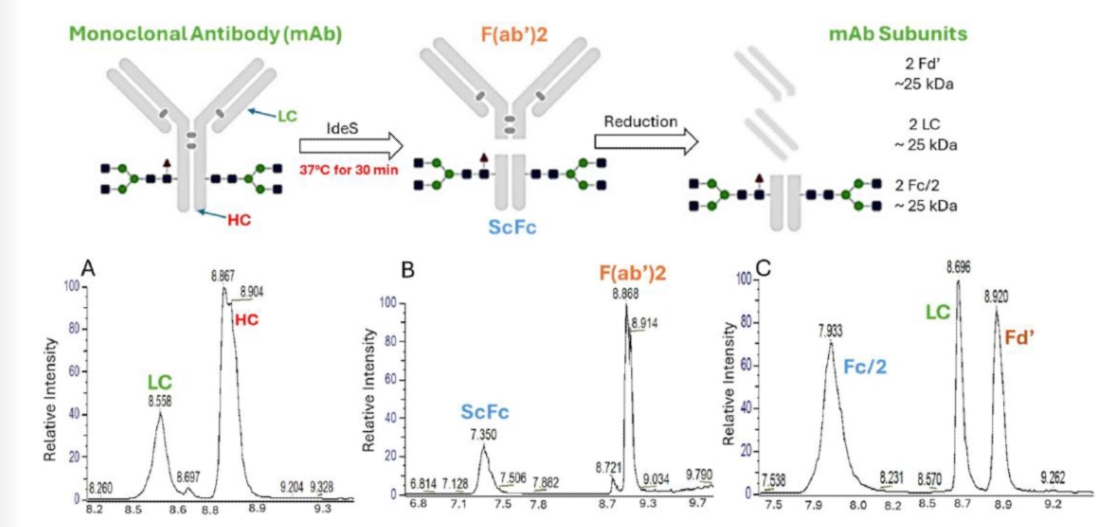
Mass spectrometry plays a vital role in the characterization of monoclonal antibodies (mAbs) during biopharmaceutical development and manufacturing. Techniques such as intact mass analysis and peptide mapping are now standard tools for monitoring structural integrity and product consistency. In addition, subunit analysis offers complementary insights with minimal sample preparation, providing a streamlined approach to mAb characterization.